


 Cart
Cart
 sales@molnova.com



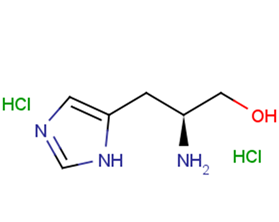
L-Histidinol dihydrochloride
CAS No. 1596-64-1
L-Histidinol dihydrochloride( —— )
Catalog No. M19736 CAS No. 1596-64-1
L-Histidinol dihydrochloride is a precursor of histamine and a reversible inhibitor of protein synthesis.
Purity : >98% (HPLC)
 COA
Datasheet
HNMR
HPLC
MSDS
Handing Instructions
COA
Datasheet
HNMR
HPLC
MSDS
Handing Instructions
| Size | Price / USD | Stock | Quantity |
| 100MG | 37 | In Stock |


|
| 200MG | Get Quote | In Stock |
|
| 500MG | Get Quote | In Stock |
|
| 1G | Get Quote | In Stock |
|
Biological Information
-
Product NameL-Histidinol dihydrochloride
-
NoteResearch use only, not for human use.
-
Brief DescriptionL-Histidinol dihydrochloride is a precursor of histamine and a reversible inhibitor of protein synthesis.
-
DescriptionL-Histidinol dihydrochloride is a precursor of histamine and a reversible inhibitor of protein synthesis.
-
In Vitro——
-
In Vivo——
-
Synonyms——
-
PathwayProteasome/Ubiquitin
-
TargetEndogenous Metabolite
-
RecptorHuman Endogenous Metabolite
-
Research Area——
-
Indication——
Chemical Information
-
CAS Number1596-64-1
-
Formula Weight214.09
-
Molecular FormulaC6H13Cl2N3O
-
Purity>98% (HPLC)
-
SolubilityDMSO:10 mM
-
SMILESCl.Cl.N[C@H](CO)Cc1cnc[nH]1
-
Chemical Name——
Shipping & Storage Information
-
Storage(-20℃)
-
ShippingWith Ice Pack
-
Stability≥ 2 years
Reference



-
Propionic acid
Propionic acid (PA) is widely used as an antifungal agent in food. It is present naturally at low levels in dairy products and occurs ubiquitously together with other short-chain fatty acids (SCFA) in the gastro-intestinal tract of humans and other mammals as an end-product of the microbial digestion of carbohydrates.
-
N-acetyl-D-Lactosami...
N-acetyl-D-Lactosamine (N-Acetyllactosamine) is a disaccharide consisting of galactose and N-acetylglucose, which is an important component of various oligosaccharides and can be used as a starting material for the synthesis of various oligosaccharides.
-
Heptacosanoic acid
Heptacosanoic acid is a compound derived from Rhodosporidium kratochvilovae HIMPA1, a novel oil-bearing yeast isolated from Himalayan permafrost.
